
Jun 19,2026
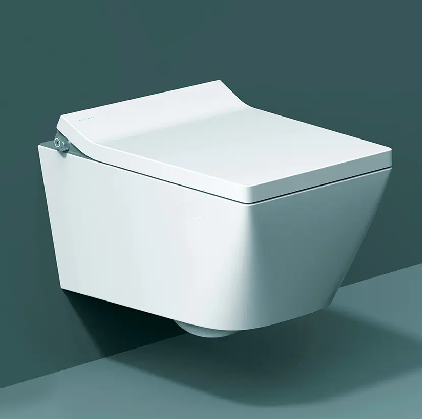
Smart bidet toilets come with various control methods. Side panels are common. But a remote control toilet bidet offers a fundamentally different interaction model. Instead of reaching sideways and twisting to see buttons, the user holds the controller in a natural position. This small change has significant effects on ease of use, especially for specific user groups.
Physical reach is no longer an issue
On a traditional bidet toilet, the control panel attaches to the side of the seat. Using it requires twisting the torso and looking down. For anyone with back problems, limited mobility, or arthritis, that movement can be difficult or painful.
A remote control toilet bidet eliminates this problem entirely. The controller sits in a wall-mounted bracket or rests on a nearby shelf. The user picks it up and operates it at a comfortable angle. No twisting. No leaning. No need to take eyes off the seated position entirely.
For elderly users or those recovering from surgery, a remote control toilet bidet makes independent use possible when a side-panel model might not. The remote can be held in the lap, operated with one hand, and returned to its holder without strain.
Button layout follows logic, not space constraints
Side panels are limited by the physical space available on the seat. Buttons must fit into a small area, often becoming tiny and crowded. A remote control toilet bidet has no such limitation.
Manufacturers can arrange buttons on a remote control toilet bidet in logical groups. Wash functions in one area. Dryer controls in another. Flush and stop buttons in a distinct third zone. The result is less guesswork and fewer accidental presses.
Some remote control toilet bidet models use tactile differentiation. Different button shapes for different functions. Raised markers on frequently used buttons. These features help visually impaired users or anyone operating the remote without looking.
Memory settings serve multiple household members
A household with different people has different preferences. One person wants higher water pressure. Another prefers lower pressure and warmer temperature. A third uses only the rear wash function.
A quality remote control toilet bidet stores user profiles. Each person presses their designated button. The remote control toilet bidet recalls their exact settings. Water pressure, nozzle position, water temperature, seat temperature, and dryer settings all return to that user’s preferences instantly.
Without memory settings, each user would manually adjust controls every time. That adds friction to daily use. With a remote control toilet bidet that saves profiles, the experience is personalized and immediate. This feature is particularly valuable for families with children who cannot remember complex adjustment sequences.
Night visibility without turning on lights
Middle-of-the-night bathroom visits present a common problem. Turning on bright lights disrupts sleep. Fumbling for small buttons on a dark side panel is frustrating.
A remote control toilet bidet solves this with backlit buttons. The controller glows softly enough to see but not enough to disturb sleep patterns. Some models use motion sensors that light up the remote control toilet bidet when someone approaches.
Side panels rarely offer this feature because they are fixed in place. A remote control toilet bidet can be positioned wherever the user prefers, including near the toilet paper holder or within easy reach from the seated position. The backlight works regardless of where the controller is placed.
Installation flexibility in tight bathrooms
Bathroom layouts vary widely. Some toilets are installed close to walls. Others sit next to bathtubs or vanities. Side control panels on the toilet itself require clearance for the user’s hand and arm.
A remote control toilet bidet removes this constraint entirely. The toilet can be placed in a tight alcove or close to a side wall. The user does not need to fit a hand between the toilet and the obstruction. The remote control toilet bidet lives on a wall bracket, on a counter, or even on a small shelf across the room.
This flexibility is particularly valuable in small apartments, renovated older homes, or accessible bathrooms designed for wheelchair transfer. The toilet can go where it fits best, while the remote control toilet bidet goes where the user can reach it easily.
Learning curve for new users
Guests unfamiliar with bidet toilets often hesitate to press buttons on a side panel. The location feels awkward. The function labels may be unclear.
A remote control toilet bidet is more intuitive. Handing a guest a remote control toilet bidet and pointing to the clearly labeled buttons reduces hesitation. Most people have used television remotes or other handheld controllers. The mental model transfers easily.
For households that host visitors regularly, a remote control toilet bidet reduces awkward explanations and makes the bidet experience more welcoming for first-time users.
Copyright © Seewin Technology (Zhejiang) Co., Ltd.All Rights Reserved.
Customized Functional Electric Smart Toilet Factory

 English
 中文简体
中文简体 русский
 Français
 Español
 عربى
عربى Türk
Türk